
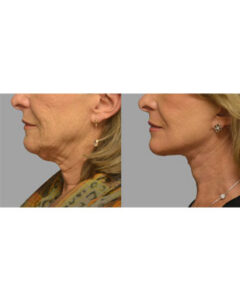
 Wondering what facelift recovery is really like? Learn what to expect after a deep plane facelift, including recovery timeline, swelling, healing tips, and when you’ll see your final results.
Understanding Deep Plane Facelift
A deep plane facelift is one of the most effective facelift techniques performed today, and it’s the common approach used in my practice. This technique lifts the deeper facial layers for a natural, long-lasting result without looking “overdone.”
Many patients are pleasantly surprised to learn that facelift surgery is not particularly painful. You may look swollen or bruised initially, but most people find that they feel far better than they appear in those first few days.
Immediately After Surgery
Once your facelift is complete, you’ll wake up from anesthesia with incisions placed discreetly around the ears and extending slightly behind the hairline. I typically don’t apply bulky dressings to allow me to monitor your skin and swelling closely.
If your submandibular glands are prominent, I may contour them during surgery for a smoother, more defined neckline. In that case, you may have small drains placed behind the ears for several days. You’ll receive simple instructions: empty the drains when full, resecure them, and avoid pulling on the tubing.
The First Few Days at Home
It’s very important to have help at home during the first couple of days after surgery. You’ll still be recovering from anesthesia, and having someone to assist with medications, incision and drain care, and basic household tasks makes recovery much easier. If needed, we can help arrange private nursing care through a local agency.
Week One: Rest and Recovery
The first week after your facelift is a period of complete rest. Stay home, keep your head elevated, and avoid anything strenuous. Light walking around the house is encouraged to promote circulation.
You can shower and wash your hair. Most patients find that pain is mild and well-managed with prescribed medication or ibuprofen.
Week Two: Follow-Up and Returning to Routine
Around one week post-op, you’ll visit our office for your first follow-up appointment. During this visit, we’ll remove any drains and sutures and check on your healing progress.
Most patients can comfortably return to work after this appointment, as long as their job is not physically demanding.
Weeks 2–3: Managing Swelling and Healing
Avoid exercise and heavy activity for three full weeks. This allows the tissues to heal properly and reduces the risk of bleeding or hematoma formation.
During this period, swelling will be most noticeable. To help minimize it:
- Keep your head elevated as much as possible
- Follow a low-sodium, anti-inflammatory diet
- Consider gentle lymphatic massage if approved
These steps all help accelerate healing and improve your comfort.
Three Weeks and Beyond: Seeing Your Results
At around three weeks, the swelling will have decreased significantly. While you may still notice some fullness, most patients feel confident being seen in public — and other people are unlikely to realize you’ve had surgery.
By three months, your results are taking shape. This is when we take early post-op photos, and you can start to appreciate your more youthful, refreshed appearance.
Between six and twelve months, all swelling will have resolved, revealing your final facelift results — smoother contours, improved definition, and a naturally lifted appearance.
Recovery after a deep plane facelift is a gradual process, but most patients are amazed at how smooth and comfortable recovery can be with proper care and guidance.